Tuesday, 18 October 2011

The Shadow Out of Time

"The Shadow Out of Time" first published in Astounding Stories, June 1936.
This is the the twenty-ninth entry in my read-through of the commemorative edition of Necronomicon: The Best Weird Tales of H P Lovecraft.

In an An H P Lovecraft Encyclopedia, S T Joshi notes that the period of Nathaniel Wingate Peaslee's mental possession in The Shadow Out of Time – 1908 to 1913 – matches up pretty closely to the time that HPL's neurotic state led him to withdraw from high school, and from the world with increasingly hermit-like behaviour. He also mentions how the creatures inability to control the face of their human host could be linked to the facial tics that HPL suffered from in this period. I hadn't made this connection when I was reading the story, but I very quickly sensed that this was one of HPL's mental health issue stories.

Unfortunately, despite the possibility of this one being another febrile gem like The Outsider or The Dreams in the Witch House, HPL instead gets interested in his Great Race. The creatures who possessed Peaslee's body and imprison his mind for years in a hideous alien form turn out not to be invasive demonic figures like the Deep Ones or Brown Jenkin, but another dreary race of cosmic utopians.

Sunday, 16 October 2011

The Pale Queen's Courtyard by Marcin Wrona

As I mentioned in my entry on The Big Knockover (and maybe in Dracula as well) I have a Kindle now, and as a failed writer, I am quite naturally very interested in the new wave of electronic self-publishing that has come in its wake. I have a few acquaintances who have had a go at self-publishing on Kindle, and one in particular asked me to review his book on here and for amazon.

This put me a tricky position! I'm only vaguely acquainted with Mr Wrona through an RPG message board, and I've read a little of his travails in getting The Pale Queen's Courtyard published (it was a finalist in a high-profile unsigned fantasy writers competition a couple of years back) and so I was confident that it met a certain basic level of competence but I was still a little hesitant – if I didn't like it, it would be socially difficult (in a low-key way) to piss all over his cornflakes, as it were.

I am a slave to social niceties like this: sometimes my inner monologue is like an episode of Seinfeld on permanent loop.

Consequently, I declined his offer of a freebie and instead bought a copy myself on the quiet so that if I didn't like it I could just not mention it again and get around the whole tricky business that way. Fortunately, however, the Pale Queen's Courtyard is really good.

Friday, 14 October 2011

The Big Knockover and Other Stories

Things have gotten a bit behind here at Pointless Philosophical Asides due to visiting relatives, other projects and my search for a new job. I finished The Big Knockover about six weeks ago, and so that's quite a gap between reading and blogging, but what can I say, events intervened.

This book is one I took with me on holiday in late August. I have a Kindle now, which I'd loaded up with holiday reading (although I read much less on holidays these days than I used to, a situation exacerbated this time around as we had my mother with me) but I took this hard copy book with me because I was a little nervous about the combination of a beach or pool, an expensive electronic device and my own general cack-handedness.

It was also nice, I suppose, to have an old fashioned book with me that I could turn to while I got used the New Age of Publishing. Perhaps this will be the last print book I ever review? Hm, that seems unlikely, given the growing pile of hard copy books that sits by my desk. In fact, the Kindle has just become a sort of portable pile as it fills up with bright ideas from Project Gutenberg, and sudden “oh yes, I'd love to read that!” moments on amazon.

Anyway, I've been turning to Hammett recently in my ongoing quest to get a good grip on the detective genre for a project I'm working on. Hammett's stories are great, with just the right mix of sardonic wit, real danger and human insight. It's been a while, so I won't address too much in detail, but there are few general observations that I think are helpful to me.

Wednesday, 12 October 2011

The Shadow Over Innsmouth

"The Shadow Over Innsmouth", first published as a booklet with limited distribution in 1936, and subsequently in Weird Tales, Janaury 1942.

This is the the twenty-eighth entry in my read-through of the commemorative edition of Necronomicon: The Best Weird Tales of H P Lovecraft.


If I had to choose a single story that shows the very best of HPL, it would have to be this one. In The Shadow Over Innsmouth, all his various quirks and ticks combine to produce a story of sublime rising horror, and where all the individual elements come together to a genuinely disturbing climax. It features some of his finest evocative writing and focuses on his favourite themes of xenophobia, degeneration, superstition and the spectre of madness that hangs over all HPL's first person narrators.

Tuesday, 27 September 2011

Dracula by Bram Stoker

A wealthy East European wishes to relocate to London, a city he has read about and long admired from afar. Following a period of political instability in his home country, he finds himself rich, and decides to make his dream come true. The source of his wealth is... well, he doesn't want anyone prying too deeply into that, so he contacts several law firms in regional parts of the UK to move various of his assets from his remote postage stamp sized republic in the Carpathian mountains and acquire assets in Britain immediately.

He hires a private yacht to sail him around the coast of his homeland and out through the Black Sea into the Mediterranean and on to Whitby in England. When he gets to London, he buys property: a big pile out in Essex backing on to a mental hospital and a few choice properties around greater London to live in or rent for an income as he sees fit.

He endeavours to make his way in British society, making the acquaintance of a couple of ladies in a church yard and this is where his troubles begin. He is something of a lady killer, and begins an affair with one of the women, who undergoes some kind of attack shortly after making his acquaintance. Well, these English ladies, eh? So lovely and so fragile!

Shortly after the attack, she is spotted abducting young children from Hampstead Heath, and our gentleman – who has aristocratic roots, might I add – finds himself under suspicion for causing her mania. Soon, the lady's former lover, the chief doctor in the psychiatric hospital that abuts his new home, contacts one of his old school teachers, an eccentric conspiracy nut who has a thing for blaming East Europeans for the world's evils. They recruit the dead girl's friends to form a kind of posse to drive the new immigrant out of town.

What follows is a dark farce as the naïve Count is pursued across London by the outraged locals. Even when he flees back to his homeland, they pursue him and finally murder him in his own home. So much for British hospitality!

We always retell this one for our own era. The story has a metaphorical vacuum, where various interpreters can put in – or take out – what they want. It seems to reach deep into us, to contact fears and worries that are so familiar and recognisable that it's hard to remember sometimes that it was only written a hundred and fifteen years ago.
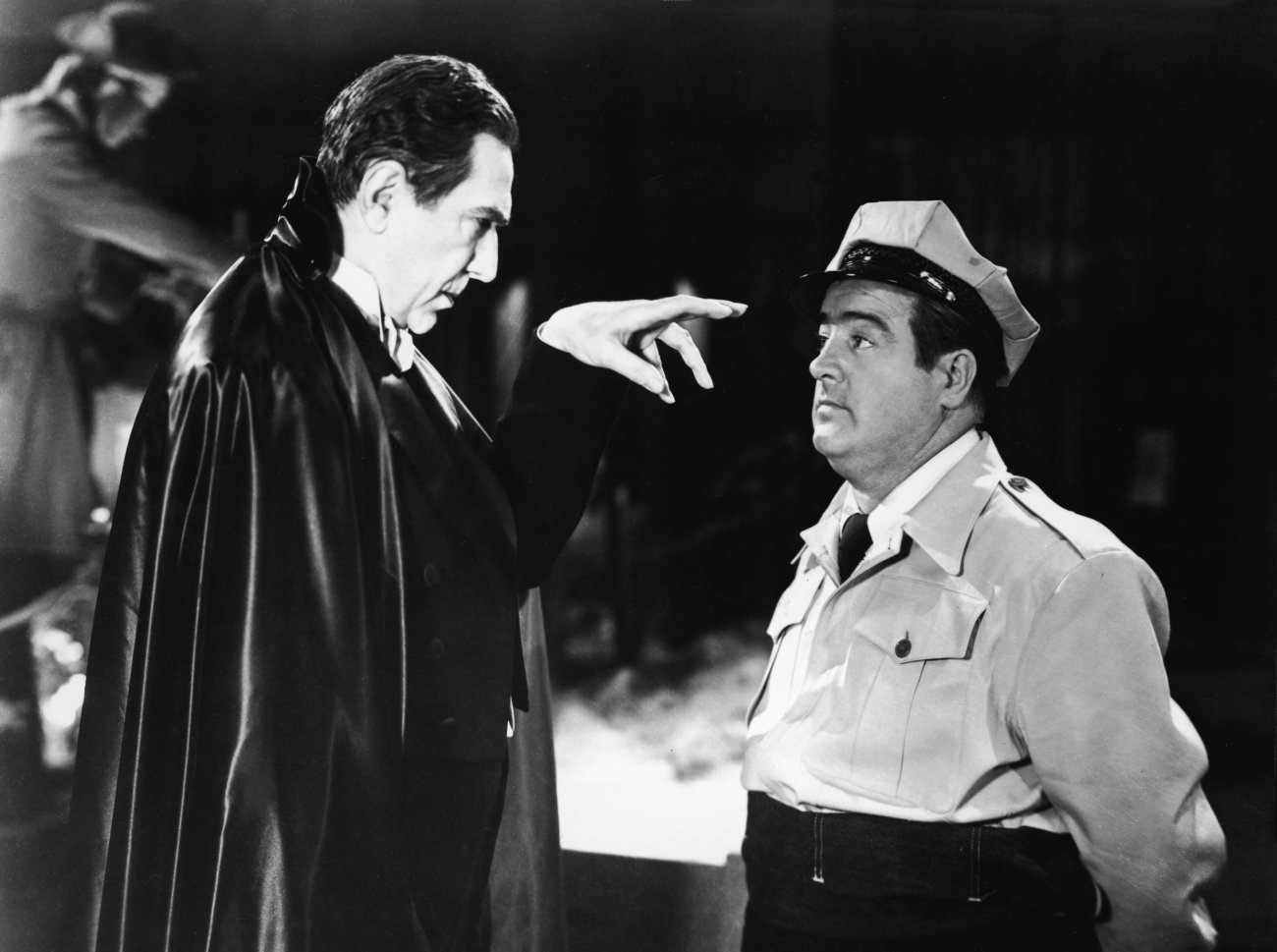
The xenophobia, the sexual tension, the grave-yard taboos all seem to come from somewhere – that keeps it at the front of our minds. It's a portrait of alienation or a reactionary villification of the other; it's a tale of the sexual license out of control or of the dangers of suppressing natural desire. An AIDS metaphor, or something about imperialism or Nazism or racism or whatever -ism you want, it seems. I'm a long time Dracula movie fan – especially when I was a kid – but this is the first time I've ever read the original – I'm not really a big fan of non-20th century fiction,  probably post war fiction, really, and had thus never gotten around to it until now. What I discovered is that perhaps my caution was justified, and that despite the power of its central imagery, most of the movies take big liberties with the story presented in the novel. And with good reason!

Wednesday, 7 September 2011

At the Mountains of Madness

 "At the Mountains of Madness", first published in Astounding Stories, February-April 1936.

This is the the twenty-seventh entry in my read-through of the commemorative edition of Necronomicon: The Best Weird Tales of H P Lovecraft.

This story is shorn of all pretence of belief in the supernatural. It swaps the impressionistic, poetic description of the cosmic gulfs from The Whisperer in Darkness and eerie immaterial paranoia of The Call of Cthulhu for the straight-edged scientific vocabulary of the geological record. Lovecraft lays his obvious real life scientific knowledge on as thick as he does the fictional histories that support so many of his other tales. The field of deep geological time was relatively new at the time HPL was writing, when plenty of people still believed the world was just a few thousand years old – the Scopes monkey trial was just 10 years before the story came out.

Sunday, 4 September 2011

Supergods by Grant Morrison

I have reviewed Grant Morrison's book Supergods over at the Zone. I knew I was going to have a lot to say about this, so when Tony asked me if I wanted to review it, I said yes. Making it a review means I have to focus it a little more than I might if I did it here, so I thought that might be a benefit, as well.

The review was an interesting one to write because the book engages three of my favourite topics: comics, cranky beliefs, and authors writing about their own fiction and process.

Grant Morrison is part of what I consider my generation of artists and writers. He's one of those 80s guys I first encountered in 2000AD and Warrior, who stormed America and beat them at their own game. He's the same sort of age as me, and clearly has had a lot of the same cultural influences on his life. When I was a kid, there was a section of the book shop called “cult”, which covered everything from Aleister Crowley and the Marquis de Sade, to William Burroughs and Hugh Selby Junior, to underground comics and Robert Anton Wilson. I read deeply from that shelf, and so, apparently, did Grant Morrison.