Showing posts with label horror. Show all posts

Monday, 19 November 2012

Reading log - Q3

Here we are again, and me much delayed. Unfortunately I’ve had a few other things on. I was busy with my Marvel Essential Warlock series – which belongs properly in Q4 – and wrote a review of The Fractal Prince, the sequel to The Quantum Thief, which belongs also in Q4. Plus, of course, the perennial nuisance of DIY.

I have been reading, though, and in the three months to 30 September, I read:

The Three Musketeers by Alexandre Dumas
Some Kind of Fairy Tale by Graham Joyce
The Great God Pan by Arthur Machen
A few John Service stories by Algernon Blackwood
Bring Up the Bodies by Hilary Mantel
Marvel Essential Super Villain Team-Up vol 1 by various.

Tuesday, 31 January 2012

The Dream Quest of Unknown Kadath

"The Dream Quest of Unknown Kadath", first published in Beyond the Wall of Sleep, 1943.

This is the the thirty-third entry in my read-through of the commemorative edition of Necronomicon: The Best Weird Tales of H P Lovecraft.


Because of the way the Necronomicon volume is ordered – by publication date rather than writing date – this comes right at the end of the anthology, rather than where it fits in the story of HPL's development as a writer. On the one hand that's a bit of a shame – immediately after this he wrote The Case of Charles Dexter Ward and embarked on the run of stories on which his reputation largely rests, and this story is clearly a turning point.

On the other hand, it's an interesting coda for all the thinking I've done about HPL the man, and how much of him resides in his fiction. They're both interesting topics and I'll take them in turn.

Wednesday, 21 December 2011

The Case of Charles Dexter Ward

"The Case of Charles Dexter Ward", first published in Weird Tales, May-July 1941.

This is the the thirty-second entry in my read-through of the commemorative edition of Necronomicon: The Best Weird Tales of H P Lovecraft.

This story is told by one of those distant and all-knowing but unknown narrators that you find a lot in classic stories. It's the the kind of narrator that can say of “none of these colloquies were ocularly witnessed, because the windows were always heavily draped” with a seemingly straight face. It can pose rhetorical questions in rapid succession, like an interrogation:

“was it not of this that Mr. Ward was reminded when his son barked forth those pitiable tones to which he now claimed to be reduced? Who had ever seen Charles and Allen together? Yes, the officials had once, but who later on? Was it not when Allen left that Charles suddenly lost his growing fright and began to live wholly at the bungalow?"

It's a often a gossipy, larky tone, such as when it observes that the local stalwart President Manning attended a violent raid on his neighbour “without the great periwig (the biggest in the county) for which he was noted.” It teases us at times, especially at the beginning with implications of horrors to come:

“And now swiftly followed that hideous experience which has left its indelible mark of fear on the soul of Marinus Bicknell Willett, and has added a decade to the visible age of one whose youth was even then far behind.”

It's almost a character in itself, it reminds me most of all of the narrator in The Rocky Horror Picture Show. Can't you just imagine Charles Gray making a meal of this?
“The true madness, he is certain, came with a later change; after the Curwen portrait and the ancient papers had been unearthed; after a trip to strange foreign places had been made, and some terrible invocations chanted under strange and secret circumstances; after certain answers to these invocations had been plainly indicated, and a frantic letter penned under agonising and inexplicable conditions; after the wave of vampirism and the ominous Pawtuxet gossip; and after the patient’s memory commenced to exclude contemporary images whilst his voice failed and his physical aspect underwent the subtle modification so many subsequently noticed.”

Tuesday, 29 November 2011

The Thing on the Doorstep

"The Thing on the Doorstep", first published in Weird Tales, January 1937.

This is the the thirty-first entry in my read-through of the commemorative edition of Necronomicon: The Best Weird Tales of H P Lovecraft.

This is how I'd like the main run of HPL's stories to be. It's a chewy story of a man brought down by his passions, it's well structured and takes its more obvious schtick (in this case the whole Ephraim Waite mind-swap deal) and trumps it with a terrific shock ending. It's not HPL at full tilt; he doesn't pull off that delirious amazing writing that characterises his best work, and passages in some of his not-best work, but it's an effective story that makes good use of his by-now familar elements – Arkham, Innsmouth and various bits of Yog Sothothery.

Unfortunately, that's not how the main run of his stories are, and this volume is clogged with hard to pass matter like Cool Air, The Unameable, From Beyond and The Shadow Out of Time, and that's even ignoring border-line juvenalia like The Nameless City and The Lurking Fear and forgiving him the utter turds like Through the Gate of the Silver Key or The Cats of Ulthar. As I come to the end of this read-through I can't help thinking that HPL's reputation rests on a relatively small number of stories, that he got it wrong more often than he got it right.

I guess I'll return to this in the coming months when I come to sum all this up. For the meantime, though, this story lifts the lid on on a matter rarely addressed by HPL, the fairer sex.

Monday, 31 October 2011

Carnacki the Ghost Finder

Yes, that's the one...
This is one of those titles I've heard bandied around a lot for many years, but never been able to track down a copy in print. It seems to have been an influence all over the place, and Hodgson tends to get mentioned alongside M R James and Algernon Blackwood as one of the early masters of the ghost tale. There is, apparently, an edition in the estimable Dennis Wheatley Library of the Occult – if I was going to choose a hard copy edition to own, that would be the one!

However, the world has moved on and it is now available free as a .mobi file for Kindle from Project Gutenberg. It's fair to say that people of Hodgson's generation wouldn't have been able to imagine the mighty corporate effort that makes these possible. The heroes of the early pulp era, before the First World War, were individualists: they were embodiments of the belief that one rational man could effect change in the world by simple of virtue of wits, pluck and persistence.

Tuesday, 18 October 2011

The Shadow Out of Time

"The Shadow Out of Time" first published in Astounding Stories, June 1936.
This is the the twenty-ninth entry in my read-through of the commemorative edition of Necronomicon: The Best Weird Tales of H P Lovecraft.

In an An H P Lovecraft Encyclopedia, S T Joshi notes that the period of Nathaniel Wingate Peaslee's mental possession in The Shadow Out of Time – 1908 to 1913 – matches up pretty closely to the time that HPL's neurotic state led him to withdraw from high school, and from the world with increasingly hermit-like behaviour. He also mentions how the creatures inability to control the face of their human host could be linked to the facial tics that HPL suffered from in this period. I hadn't made this connection when I was reading the story, but I very quickly sensed that this was one of HPL's mental health issue stories.

Unfortunately, despite the possibility of this one being another febrile gem like The Outsider or The Dreams in the Witch House, HPL instead gets interested in his Great Race. The creatures who possessed Peaslee's body and imprison his mind for years in a hideous alien form turn out not to be invasive demonic figures like the Deep Ones or Brown Jenkin, but another dreary race of cosmic utopians.

Wednesday, 12 October 2011

The Shadow Over Innsmouth

"The Shadow Over Innsmouth", first published as a booklet with limited distribution in 1936, and subsequently in Weird Tales, Janaury 1942.

This is the the twenty-eighth entry in my read-through of the commemorative edition of Necronomicon: The Best Weird Tales of H P Lovecraft.


If I had to choose a single story that shows the very best of HPL, it would have to be this one. In The Shadow Over Innsmouth, all his various quirks and ticks combine to produce a story of sublime rising horror, and where all the individual elements come together to a genuinely disturbing climax. It features some of his finest evocative writing and focuses on his favourite themes of xenophobia, degeneration, superstition and the spectre of madness that hangs over all HPL's first person narrators.

Tuesday, 27 September 2011

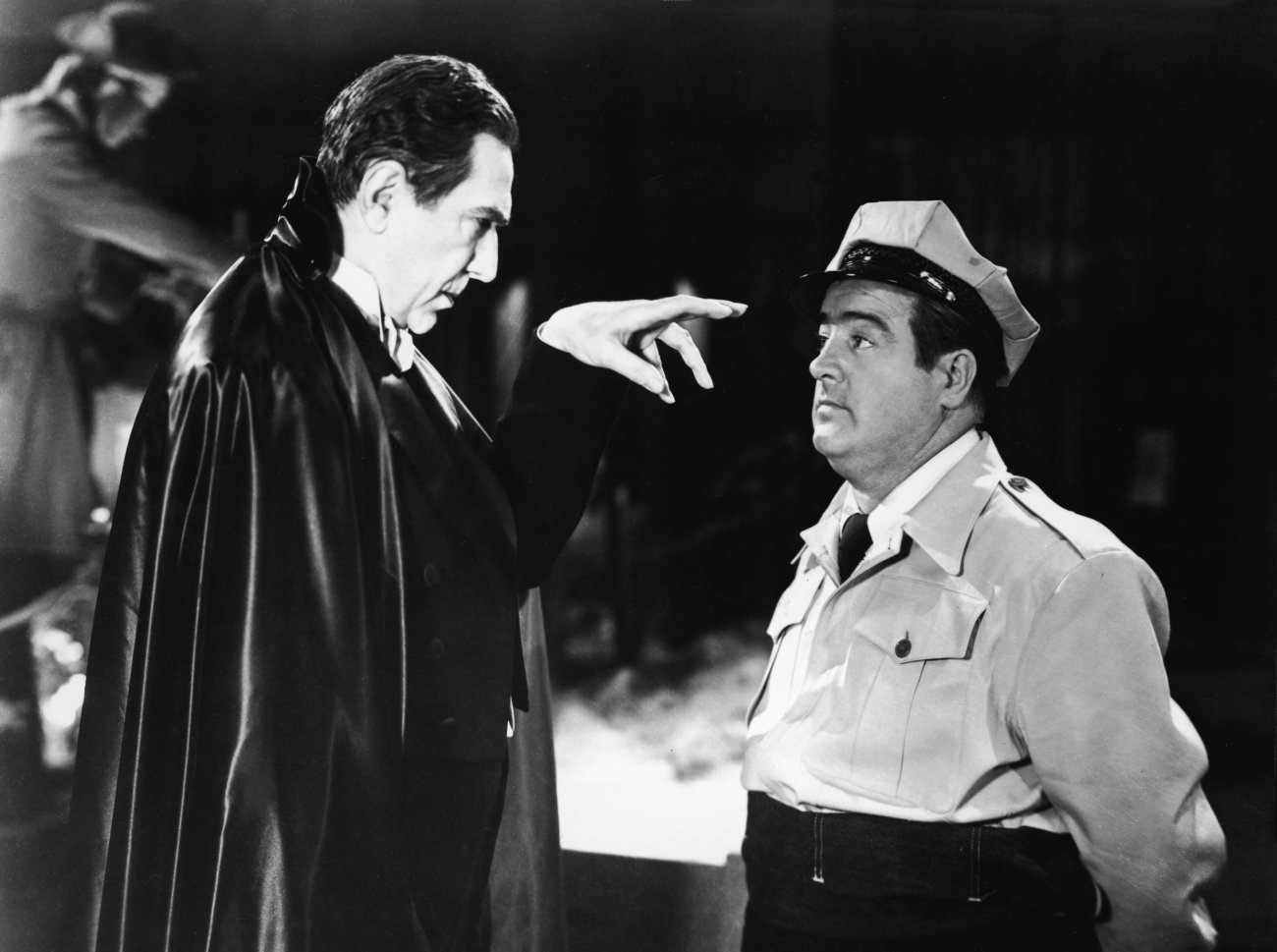
Dracula by Bram Stoker

A wealthy East European wishes to relocate to London, a city he has read about and long admired from afar. Following a period of political instability in his home country, he finds himself rich, and decides to make his dream come true. The source of his wealth is... well, he doesn't want anyone prying too deeply into that, so he contacts several law firms in regional parts of the UK to move various of his assets from his remote postage stamp sized republic in the Carpathian mountains and acquire assets in Britain immediately.

He hires a private yacht to sail him around the coast of his homeland and out through the Black Sea into the Mediterranean and on to Whitby in England. When he gets to London, he buys property: a big pile out in Essex backing on to a mental hospital and a few choice properties around greater London to live in or rent for an income as he sees fit.

He endeavours to make his way in British society, making the acquaintance of a couple of ladies in a church yard and this is where his troubles begin. He is something of a lady killer, and begins an affair with one of the women, who undergoes some kind of attack shortly after making his acquaintance. Well, these English ladies, eh? So lovely and so fragile!

Shortly after the attack, she is spotted abducting young children from Hampstead Heath, and our gentleman – who has aristocratic roots, might I add – finds himself under suspicion for causing her mania. Soon, the lady's former lover, the chief doctor in the psychiatric hospital that abuts his new home, contacts one of his old school teachers, an eccentric conspiracy nut who has a thing for blaming East Europeans for the world's evils. They recruit the dead girl's friends to form a kind of posse to drive the new immigrant out of town.

What follows is a dark farce as the naïve Count is pursued across London by the outraged locals. Even when he flees back to his homeland, they pursue him and finally murder him in his own home. So much for British hospitality!

We always retell this one for our own era. The story has a metaphorical vacuum, where various interpreters can put in – or take out – what they want. It seems to reach deep into us, to contact fears and worries that are so familiar and recognisable that it's hard to remember sometimes that it was only written a hundred and fifteen years ago.

The xenophobia, the sexual tension, the grave-yard taboos all seem to come from somewhere – that keeps it at the front of our minds. It's a portrait of alienation or a reactionary villification of the other; it's a tale of the sexual license out of control or of the dangers of suppressing natural desire. An AIDS metaphor, or something about imperialism or Nazism or racism or whatever -ism you want, it seems. I'm a long time Dracula movie fan – especially when I was a kid – but this is the first time I've ever read the original – I'm not really a big fan of non-20th century fiction,  probably post war fiction, really, and had thus never gotten around to it until now. What I discovered is that perhaps my caution was justified, and that despite the power of its central imagery, most of the movies take big liberties with the story presented in the novel. And with good reason!

Wednesday, 7 September 2011

At the Mountains of Madness

 "At the Mountains of Madness", first published in Astounding Stories, February-April 1936.

This is the the twenty-seventh entry in my read-through of the commemorative edition of Necronomicon: The Best Weird Tales of H P Lovecraft.

This story is shorn of all pretence of belief in the supernatural. It swaps the impressionistic, poetic description of the cosmic gulfs from The Whisperer in Darkness and eerie immaterial paranoia of The Call of Cthulhu for the straight-edged scientific vocabulary of the geological record. Lovecraft lays his obvious real life scientific knowledge on as thick as he does the fictional histories that support so many of his other tales. The field of deep geological time was relatively new at the time HPL was writing, when plenty of people still believed the world was just a few thousand years old – the Scopes monkey trial was just 10 years before the story came out.

Thursday, 4 August 2011

Through the Gate of the Silver Key

"Through the Gate of the Silver Key" first published, Weird Tales, July 1934.

This is the the twenty-sixth entry in my read-through of the commemorative edition of Necronomicon: The Best Weird Tales of H P Lovecraft.

DSC_1641
Image by pavelrybin and used under the terms of the creative commons license.

Well, I haven't had much luck with these Dunsanian tales so far, but this one really takes the cake. This story completely abandons narrative tension in favour of a series more-or-less unconnected encounters with distinguished metaphysical entities, crowned with a feeble “shock” ending.

Sunday, 24 July 2011

From Beyond

“From Beyond”, first published in The Fantasy Fan, vol 10, No 1, June 1934


This is the the twenty-fifth entry in my read-through of the commemorative edition of Necronomicon: The Best Weird Tales of H P Lovecraft.

. . . . I have harnessed the shadows that stride from world to world to sow death and madness. . . .
This is another of the weaker “shocker” style stories, where HPL tries hard to give a shocking weight to something we all figured out pages ago using the mighty power of italics. Once again the climactic line depends on a revelation that's painfully obvious from the start. I'm finding this a surprisingly common weakness in these stories.


Monday, 18 July 2011

The Dreams in the Witch House

"The Dreams in the Witch House", first published in Weird Tales, July 1933.

This is the the twenty-fourth entry in my read-through of the commemorative edition of Necronomicon: The Best Weird Tales of H P Lovecraft.

HPL based his fictional Arkham on Salem, the New England town that is most famous for its seventeenth century witch trials. The history and testimony of the Salem witches follow a pattern that was common at about the same time in Europe among the same religiously non-conformist communities that had fled to the New World in search of a new Jerusalem. The religious atmosphere of the seventeenth century in America that led to the witch trials still marks something about the American character: puritanical, literal-minded and keenly aware of sin and evil.


Saturday, 9 July 2011

The Strange High House In The Mist

"The Strange High House In The Mist", first published Weird Tales October 1931.

This is the the twenty-third entry in my read-through of the commemorative edition of Necronomicon: The Best Weird Tales of H P Lovecraft.

We're back in a Dunsanian mood, this time in the made-up coastal town of Kingsport. The story is told in that archaic, declamatory tone that annoyed me so much about his previous ventures into the style. It clearly spoke to HPL, but it makes me cringe.

Great beach for wind surfing, Plimmerton, NZ


Monday, 27 June 2011

The Whisperer In Darkness

"The Whisperer In Darkness", first published in Weird Tales, August 1931.

This is the the twenty-second entry in my read-through of the commemorative edition of Necronomicon: The Best Weird Tales of H P Lovecraft.

While reading this story again, I have in the back of my mind, the gaming supplement Delta Green , which re-imagines the Fungi of Yuggoth through the lens of contemporary UFO mythology. The supplement takes in Majestic 12, Roswell, greys, Project Blue book and secret government UFO files and places them in the context of decades of contact with the Fungi to great effect. Even allowing for the cleverness of Delta Green, it's surprising how close the fit is.


Sunday, 12 June 2011

The Dunwich Horror

"The Dunwich Horror", first published in Weird Tales, April 1929.

This is the the twenty-first entry in my read-through of the commemorative edition of Necronomicon: The Best Weird Tales of H P Lovecraft.
 
This is definitely the first HPL story I ever read, regardless of whatever else I might have previously said on the subject. I remember very distinctly the weird cover in an anthology called 11 Great Horror Stories that was in the book box in room six, Greenacres School in 1979. It made a big impression on me at the time. I can't remember the other stories in that collection – the internet confirms my recollection that they're stories by Poe, J P Hartley and the like – but this vivid and bizarre tale stuck with me long after I first read it. I found the image of the hideous Wilbur Whately and the last desperate attempt to banish his twin truly terrifying.

Monday, 30 May 2011

The Silver Key

"The Silver Key", first published in Weird Tales, January 1929.

This is the the twentieth entry in my read-through of the commemorative edition of Necronomicon: The Best Weird Tales of H P Lovecraft.

This story sees the return of Randolph Carter, the narrator of The Statement of Randolph Carter (obviously) and The Unnameable. These two earlier stories form incidents in this longer-term narrative which examines the circumstances of Carter's life and describes his efforts to discover a purpose in life after he loses “the key of the gate of dreams” exiling him forever from a nocturnal revelling in Orientalist fantasies.

Thursday, 26 May 2011

The Shunned House

"The Shunned House", first published in an amatuer booklet that was printed but not distributed in 1924, then in Weird Tales, October 1937.

This is the the nineteenth entry in my read-through of the commemorative edition of Necronomicon: The Best Weird Tales of H P Lovecraft.

It's possible that to really know HPL, you must know Providence, at least in passing. Visiting gives you the scope of his territory, the physical constraints of his days, the shape of the streets and quality of the landscape that shaped his mind. The geography of a place defines it, after all, the places that are easy or hard to get to, the natural borders between districts or neighbourhoods marked by hills or valleys or streams and the agency of human civic planning.

Jane at The Shunned House, just about visible on the left

Thursday, 19 May 2011

Cool Air

Cool Air”, first published in Tales of Magic and Mystery, March 1928.

This is the the eighteenth entry in my read-through of the commemorative edition of Necronomicon: The Best Weird Tales of H P Lovecraft.

...for you see I died that time eighteen years ago.
Well, after that run, I suppose it was going to happen that we'd end up with something a little less compelling. It's another one of those “sting in the tail” type stories, like In The Vault or The Hound. It's a favourite HPL trick, and even a few of the better stories aim at this sort of macabre climax – The Rats in the Walls, for example or The Outsider - but I find this kind of shock ending cheapens a horror story. The italicisation of the last line also puts me off these – I have this vision of the narrator turning to me and shouting the punch line in my face while pointing at the scary thing with a big arrow. It could be Vic Reeves actually.

Sunday, 8 May 2011

The Call of Cthulhu

"The Call of Cthulhu", first published in Weird Tales, February 1928.

This is the the seventeenth entry in my read-through of the commemorative edition of Necronomicon: The Best Weird Tales of H P Lovecraft.

This is one of – if not THE - archetypal “Lovecraftian” story. It has all the elements you expect from HPL: dreams; ancient myths; degenerate cults; and impenetrable and incomprehensible ancient horrors. The structure of the story is also typical of what we've come to expect from him: a distant, anonymous narrator; the aggregation of information from diverse sources, the slow build up of suggestion and dread.

Wednesday, 20 April 2011

The Colour Out of Space

"The Colour Our of Space", first published in Amazing Stories, September 1927.

This is the the sixteenth entry in my read through of the commemorative edition of Necronomicon: The Best Weird Tales of H P Lovecraft.